
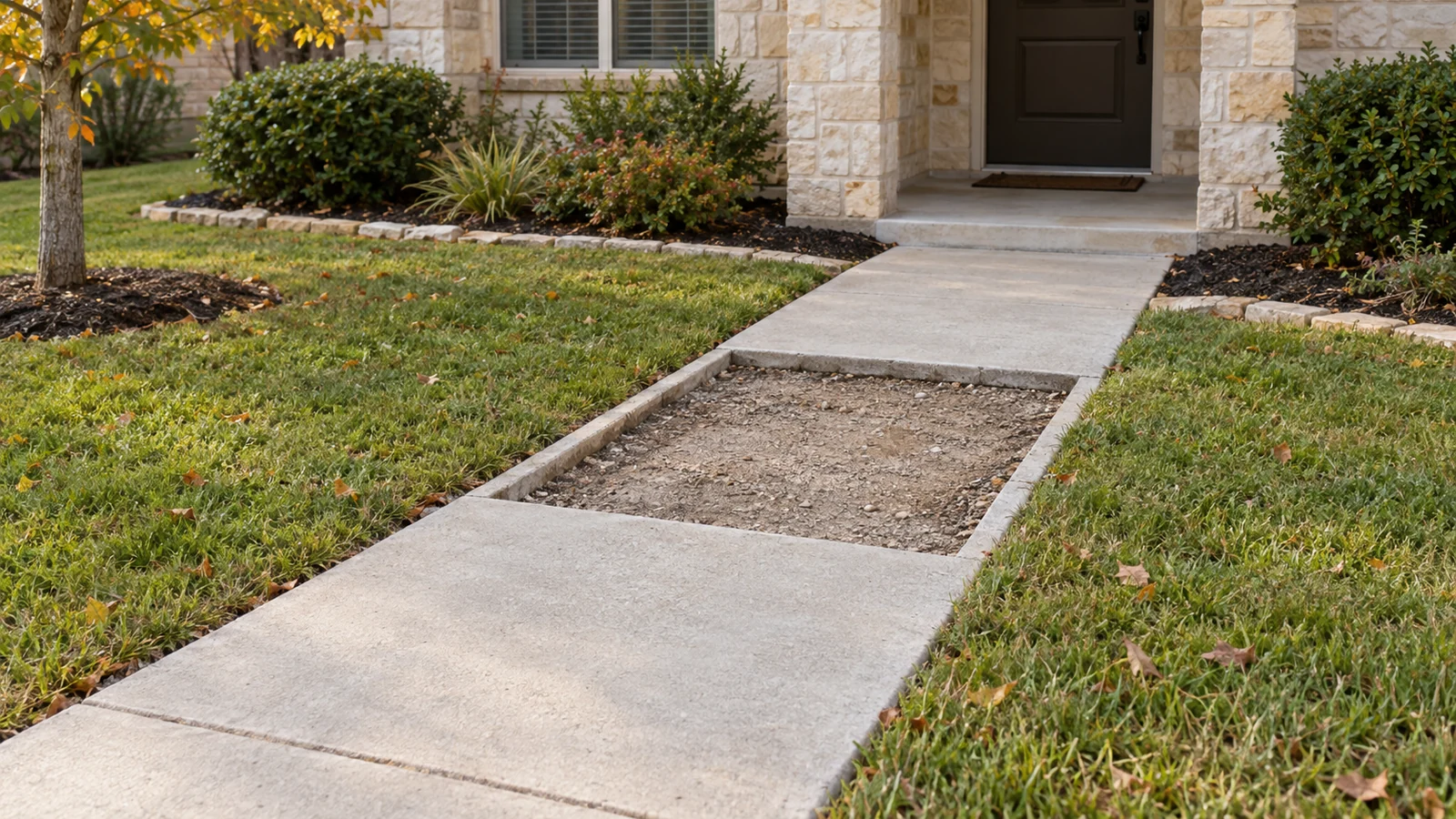
AI-generated editorial illustration, not a photograph of company equipment or a customer project.
Short-load concrete in Lometa can be useful when a repair or small project does not need a full truck's quantity. The smaller order still needs a complete plan: what is being built, what concrete is specified, how much is required, how the truck can reach the site, and who will receive and place the material.
For an October sidewalk repair, small patio, footing, or separate pad, begin with the contractor's assessment rather than the assumption that a small job is simple. Lampasas Trucking & Redi-Mix advertises smaller ready-mix deliveries, but the order is not a repair design or an automatic construction package. Use this guide to prepare the supplier conversation without prescribing concrete thickness, reinforcement, repair methods, or a universal minimum load.
The Lometa service-area page specifically lists smaller concrete pours, including post footings and patch repairs. Use that as a reason to discuss a measured small order, not as a promise of a universal minimum, fixed fee, or same-day slot. Give dispatch the Lometa address, project requirements, and access notes before coordinating the placement team. The page describes service from Lampasas, but the actual quantity, schedule, and load arrangement still need confirmation for your project.
What does short-load concrete mean for Lometa?
The company's short-load ready-mix concrete page describes an order below a full truck's capacity. It names projects such as sidewalk patches, fence-post footings, small patios, and repair work.
The page does not establish one numeric minimum or truck capacity for every order. It also notes a small-load fee without publishing a fixed amount, so ask about the particular quantity and delivery arrangement.
Short-load service is an ordering option, not proof that every small repair should use delivered concrete. Have the project professional establish the scope, material requirements, and appropriate construction method first.
Define the Lometa repair before ordering
Tell the supplier what is being repaired or built and what requirements the contractor has identified. A cracked surface, an uneven section, or a damaged edge can have different causes; this article does not diagnose them from appearance.
Have the contractor decide whether removal, replacement, or another repair approach is appropriate. Ordering new concrete does not itself resolve underlying drainage, movement, construction, or loading questions.
Keep the ready-mix delivery requirements with the project information. Application, loading, weather, and finish requirements still matter even when the order is smaller than a full load.
Measure every separate section
Record the dimensions specified for each part of the work, using consistent units. A sidewalk patch and a separate footing should not be reduced to one average shape just because they may be placed during the same visit.
NRMCA's ready-mix ordering guidance recommends estimating volume from the plans and reviewing project contingencies. Ask the contractor and supplier to confirm the final quantity rather than adding a universal percentage or rounding the estimate to a convenient truck count.
Identify who approves any order revision. A change in the repair boundaries or another section added later should be reviewed before dispatch, not treated as an automatic addition to the original quantity.
Check whether a smaller load still needs the same access review
Do not assume a short load uses a vehicle that can reach every narrow residential entrance. Give dispatch the exact address, intended entrance, receiving location, and known restrictions so the available arrangement can be assessed.
Review soft ground, uncertain crossings, overhead obstacles, turning conditions, and conflicts with parked equipment. A smaller amount of concrete does not establish that the delivery route is suitable.
If base materials are part of the repair, coordinate them through the sand, gravel, and aggregate delivery service. That delivery is separate from professional assessment and construction of the repair.
Use a small-project readiness checklist
Separate the order details from the construction responsibilities. This makes it easier to see which decisions are confirmed and which still need a qualified person.
| Item | What to prepare | What not to assume |
|---|---|---|
| Repair scope | Contractor's defined work and requirements | New concrete fixes every cause |
| Quantity | Dimensions and reviewed estimate | A small project needs a guessed amount |
| Mix | Applicable project specification | All repairs use the same mixture |
| Access | Entrance and receiving-area information | A short load guarantees a smaller truck |
| Placement | Crew and method arranged for the work | Delivery includes finishing |
| Protection | Contractor's curing and access plan | Appearance establishes readiness for use |
Keep the approved plan with the receiver. The person who requested the concrete and the person at the site should not be working from different versions of the repair.
Coordinate placement and protection
Arrange the qualified crew and any separate placement equipment before delivery is scheduled. The material order should not be treated as an automatic promise of pumping, finishing, structural design, or inspections.
NRMCA's curing guidance explains the importance of suitable moisture and temperature conditions as concrete develops its properties. Have the contractor establish the approach for the actual repair and communicate restrictions on traffic or later work.
Confirm the address and service through the service-area page, then call Lampasas Trucking & Redi-Mix at (512) 556-3000 to review availability, the order, and the proposed schedule.
Short-load concrete FAQs
Can a small Lometa concrete order be assumed available the same day?
No. Lometa is listed for short-load concrete, including smaller footings and patch repairs, but a listed service does not reserve a truck or establish a delivery date. Call with the exact address, measured quantity, specified material, and placement arrangements. Confirm availability, applicable charges, and the particular load requirements before scheduling the receiving crew.
Is there a published minimum quantity for every short load?
The reviewed service page defines a short load relative to a full truck and does not state a universal numeric minimum. Ask dispatch about the quantity your project needs, available load arrangements, and applicable charges. Do not use an assumed truck capacity or another supplier's minimum as this company's rule.
Does a short load guarantee a smaller delivery vehicle?
No particular vehicle is guaranteed here. Explain the entrance, route, turning conditions, and receiving location so dispatch can assess the arrangement for the order. A smaller concrete quantity does not independently establish that a truck can use a tight driveway or an uncertain crossing.
Should new concrete be ordered as soon as a crack is noticed?
Have the appropriate project professional assess the condition and establish the repair scope first. The cause and suitable approach cannot be determined from a generic article or appearance alone. Concrete delivery is a supply service, not a diagnosis of drainage, movement, construction, or loading problems.
Who manages curing after a small repair?
Identify the qualified contractor or other responsible project professional before delivery. The repair still needs a project-specific protection plan and clear restrictions on use afterward. Do not assume that a small volume eliminates curing requirements or that a finished-looking surface is immediately ready for traffic or equipment.
Review the small order as carefully as a large one
Have the defined repair, specification, approved quantity, address, and receiving plan ready when calling Lampasas Trucking & Redi-Mix at (512) 556-3000. Published hours are Monday–Saturday, 7:00 AM–5:00 PM; confirm the particular short-load arrangement, charges, and requested delivery rather than treating an estimate as a booking.